Eric Mingus – The Mingus Mill Project
The Mill is a multidisciplinary artwork envisioned by Eric Mingus as an exercise in storytelling, creative expression, community building and honoring of ancestors. Eric is currently seeking support for the creation and development of this project, with the ultimate goal of producing an evening length staged concert for touring, with the set being used to facilitate story based community art making while not in use for performances.
Here is Eric’s account of how this project came to be, and why it is so important to him:
‘The Mill’ is a creative work that tells the story of the Black Mingus family lineage in the Great Smoky Mountains, specifically where the bloodlines of the enslavers and the enslaved mixed. After so many years of the historical focus in the family being solely focused on my father Charles Mingus Jr, finding this path to his forebears has made me feel more whole as a person, with a broader understanding of my legacy. The hardships that were endured by my ancestors are unimaginable; this work will tell their story and honor their incredible ability to survive, against seemingly insurmountable odds.
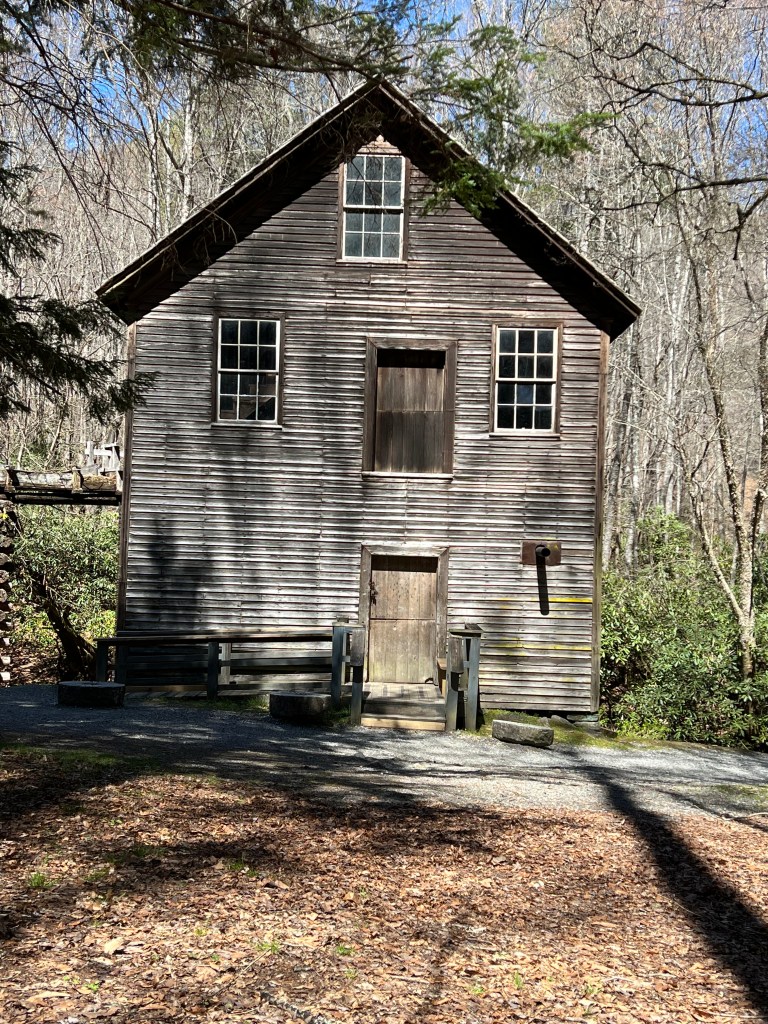
My great grandfather Daniel Mingus was born into slavery. An expert carpenter, he built the Mingus Mill, as well as the house of the (white) Mingus family and many of their furnishings. After emancipation, he stayed on with the Mingus family as a paid carpenter and woodworker. Daniel was also hired out to others in the community; the Mingus family profited from his skills before and after slavery.
Daniel’s son, Charles Mingus Sr, was the result of relations between Daniel and Clarinda. Clarinda was the granddaughter of the white Mingus Household. Unwelcome in the house where he was born, at an early age Charles fled the Great Smoky Mountains for Knoxville, TN to join the military. He became one of the Buffalo Soldiers, who were the vanguard for Teddy Roosevelt and his Rough Riders at The Battle of San Juan Hill in the Spanish-American War. Historically they were left out of this story for Roosevelt’s political gain; the African American soldiers were even cropped out of the victory photo.
Back in the nineteenth century, the Great Smoky Mountain region was broadly diverse, but the stories to date reflect a narrow view, focused only on the story of white European settlers. They ignore the history of the indigenous people who were displaced by these settlers, and of the enslaved people who were forcibly brought there, and whose labor generated wealth and power for the settlers.
My first visit to the Mingus Mill in August 2022, was illuminating, challenging and somehow darkly beautiful. It raised complicated emotions and presented me with inspiration for new music. I found myself deeply inspired by this place and its history, of which I am undeniably a part. It also gave me a fundamentally different perspective on my own work as a carpenter/woodworker, which has been a part of my life since I was an early teen. I always thought of this as something I had been taught by my stepfather, but learning about Daniel’s talent made me understand the deep soul connection I have always felt when working with wood. I composed a piece entitled ‘The Mill (Grinds My Bones)’, which is a precursor to the much larger work to come. I am honored to have premiered this piece in duo with Yo-Yo Ma at the burial ground of my enslaved ancestors in May of 2023; this performance was profoundly meaningful to me, and gave me a glimpse of the vast artistic potential of the larger work.
The composition itself will be comprised of vocal and instrumental pieces, some of them played on instruments brought to the Smokies from Africa, such as the banjo and the African hand drum, as well as instruments I will build myself. The story will be told through music, with words spoken and sung. The sights and sounds of the Mill and its surrounding area will play a major role in this piece, as will the mixing of blood and cultures.
I hope to give all the lives that existed in that area a voice in this composition, from the indigenous people, to the settlers and the enslaved. All of these communities were rich with art, culture and music. The goal is to combine them in a way that is not just putting these influences side by side, but to blend them, much like the blood that flows through my veins, in a singular expression of that time and place.
I know that millions of people in this country are not able to trace their own roots as clearly; I hope that my musical exploration of this history can be a source of illumination and possibly catharsis for people whose family histories were erased.
Warmest Regards,
Eric Mingus
*The initial research and development for The Mill was supported by Yo-Yo Ma’s Our Common Nature, which explores how culture can reconnect us to the natural world.
 Tonewood Mill Arts Inc